Scalable
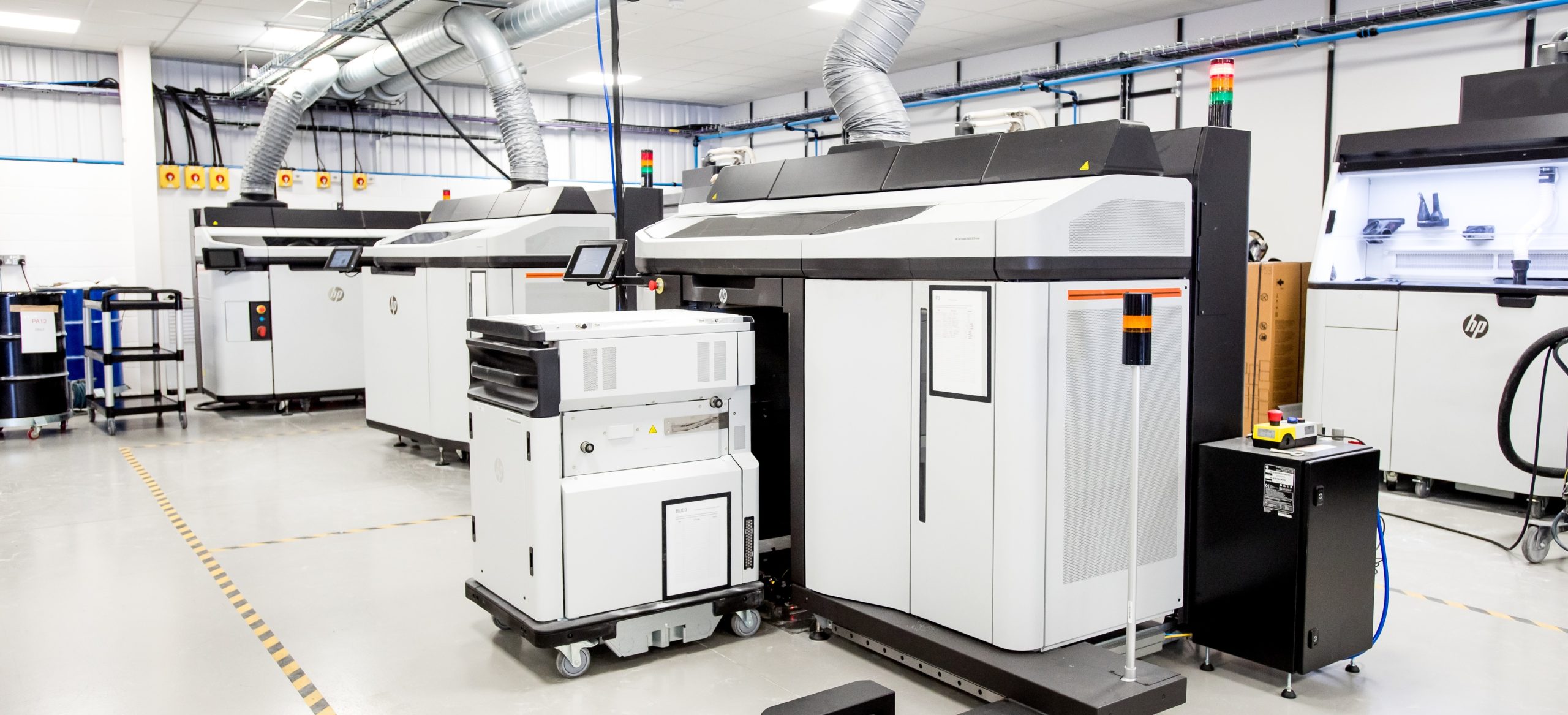
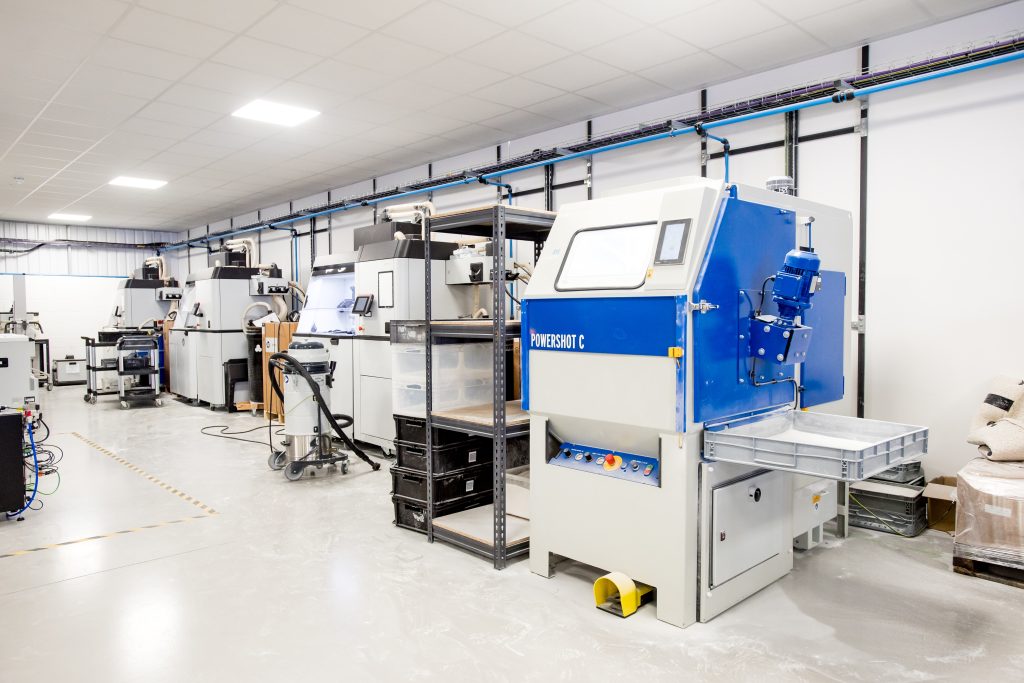
As an AMufacture partner, you can harness one of the UK’s most advanced industrial 3D printing fleets. With an always-on manufacturing ecosystem and automated build changeover units, parts can be produced at speed, at scale and at any time.

Let’s collaborate to innovate. AMufacture’s integrated additive manufacturing solutions make supply chains more agile, more resilient and better aligned with modern manufacturing demands.
AMufacture is your end-to-end contract manufacturing partner and additive manufacturing consultancy. Working with us means transforming additive manufacturing into a collaboration and a capability, an on-demand, always-on resource fuelled by seamless access to industry expertise and best-in-class production capabilities.
From design optimisation and material selection to post-processing and quality control, our systems are built around delivering production-ready parts with speed, precision and repeatability. It’s these in-house capabilities that drive our success and yours, and by continually investing in new technologies, we’re always expanding what’s possible.
AMufacture offers various types of additive manufacturing solutions, enabling clients to produce functional parts for a wide range of specialised applications.
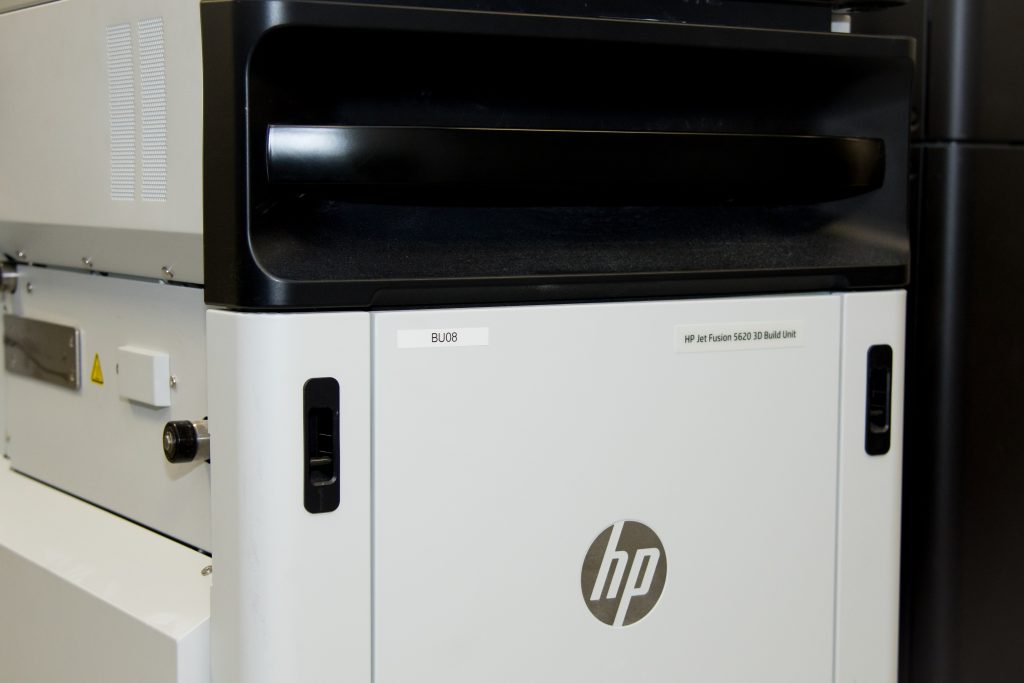
AMufacture is the UK leader in Multi Jet Fusion printing. This cutting-edge industrial 3D printing technology uses infrared light to fuse layers of nylon powder, producing functional parts at unprecedented speed, scale and efficiency.
Selective laser sintering is ideal for the low- to medium-volume production of durable, functional parts. It harnesses lasers to selectively fuse powdered polymers layer by layer, enabling complex geometries without support structures.
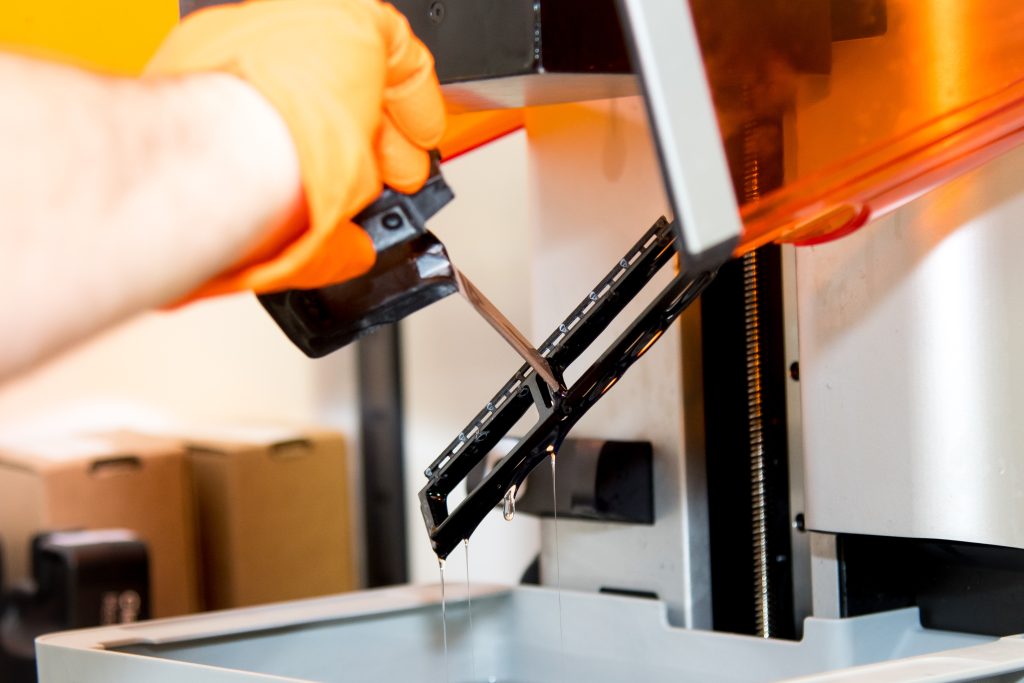
Digital light processing is a mature 3D printing technology that uses a digital light projector to cure an entire layer of photopolymer resin in one pass. Known for its speed, throughput and accuracy, it is ideal for low-volume batch production.
One of the earliest industrial 3D printing technologies, stereolithography remains the optimal choice for visual prototypes and other applications where surface quality is critical. It works by hardening photosensitive resin into hardened plastic using a UV laser.
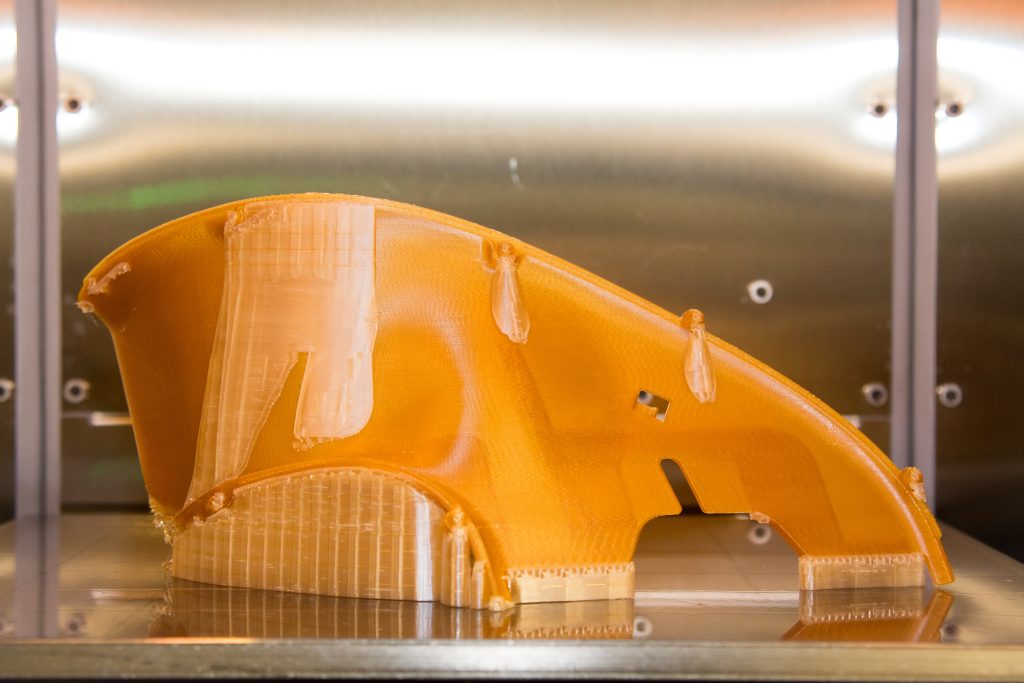
This versatile additive manufacturing process builds parts layer by layer using heated thermoplastic filament. Known for its durability, material flexibility and cost-efficiency, FDM is ideal for functional prototypes, tooling and large-format components.
AMufacture’s integrated workflows transform additive manufacturing into an on-demand capability for rapid, repeatable production at scale.
As an AMufacture partner, you can harness one of the UK’s most advanced industrial 3D printing fleets. With an always-on manufacturing ecosystem and automated build changeover units, parts can be produced at speed, at scale and at any time.
AMufacture invests in your innovation. By offering a wide range of printing methodologies and materials, we enable you to manufacture durable, functional and production-ready parts for a wide range of specialised applications.
Completed parts and workflows are stored in your secure Digital Warehouse. For you, that means seamless reordering and iteration, ideal for repeat production, rapid prototyping and mass customisation.
Your Engineering Dashboard is a single source of truth covering the entire production cycle. Track and trace components from start to finish, ensuring full production visibility, documented compliance and greater operational certainty.
Additive manufacturing produces significantly less material waste than traditional manufacturing and allows for cost-effective material reuse. Multi Jet Fusion, for instance, can achieve powder reuse rates of nearly 100%.
When you partner with AMufacture, we become your strategic, end-to-end production partner. Our digital platform enables seamless collaboration between our experts and yours, from additive manufacturing consulting to post-processing and beyond.
Additive manufacturing is an industrial production process that harnesses 3D printing, among other technologies, to enable rapid prototyping and scalable, repeatable production. Compared to traditional manufacturing, additive manufacturing services allow for shorter lead times and easier design iteration without the costs or constraints of tooling.
Additive manufacturing is sometimes known as ‘3D additive manufacturing’ or ‘additive layer manufacturing’.
Several types of additive manufacturing can be harnessed for industrial production, each with distinct benefits, use cases and methodologies.
What unites all the technologies, however, is their ability to build parts directly from digital CAD files, with no traditional tooling required. These 3D-printed industrial parts are built layer by layer using laser-fused thermoplastic powders, UV-cured resins or material extrusion.
Today, additive manufacturing is widely used in sectors where rapid innovation is the norm or where custom-fit parts are needed at scale. Common use cases for 3D printing in industrial manufacturing include:
No. Additive manufacturing is an industrial-grade production process encompassing CAD modelling, material traceability, robust quality control and post-processing treatments.
Industrial 3D printing technologies are harnessed during the manufacturing stage. However, they form only one part of a complex, digitally enabled workflow.